
 020 8444 5555

PM Burnham’s Rent Freeze: What It Means for Landlords
If you were hoping the private rented sector might settle into a predictable routine after the Renters’ Rights Act (RRA) overhauled tenancies back on May 1st, I have bad news. Andy Burnham’s arrival at 10 Downing Street has thrown another cat among the pigeons. Fresh off his stint as Mayor of Greater Manchester, Britain’s new […]
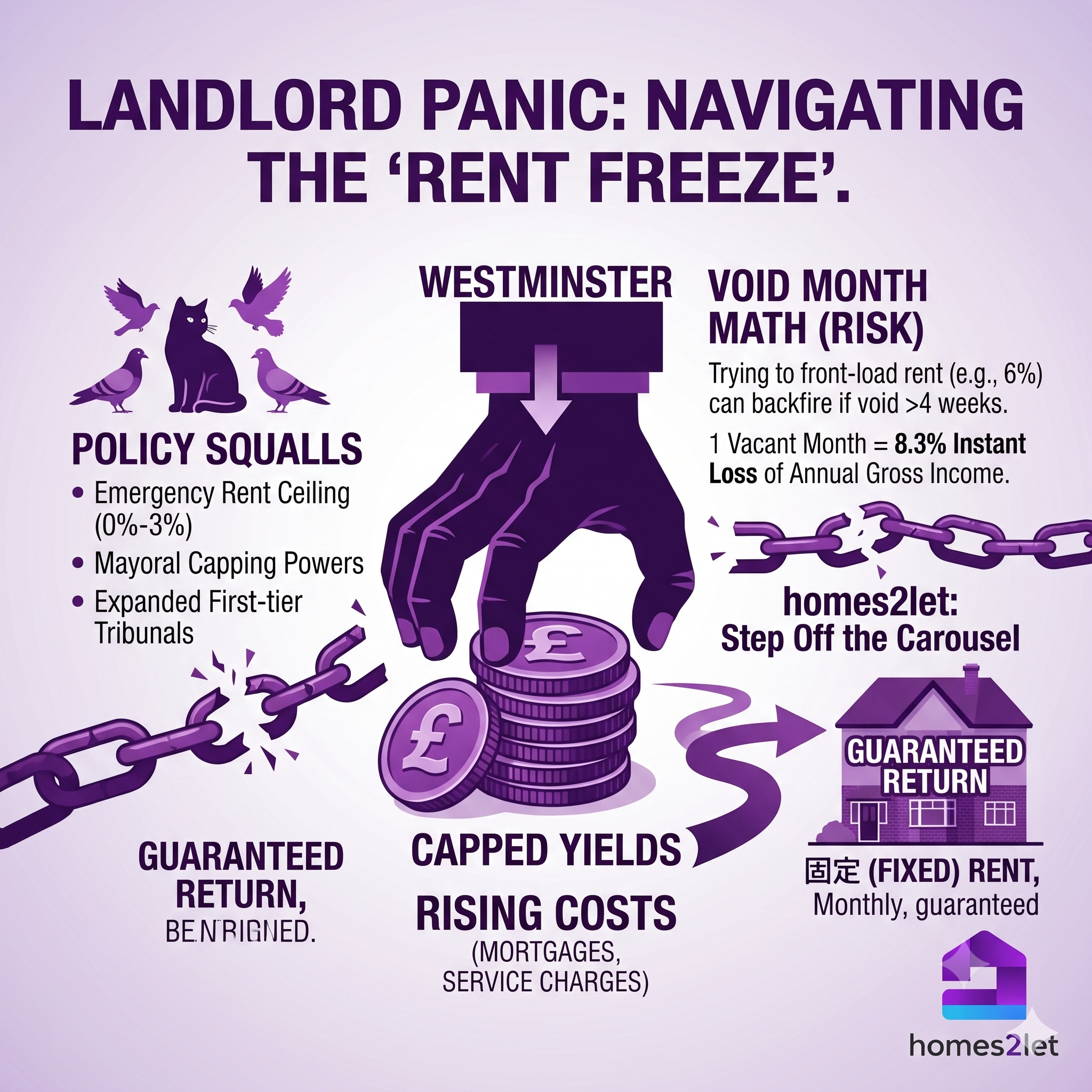
If you were hoping the private rented sector might settle into a predictable routine after the Renters’ Rights Act (RRA) overhauled tenancies back on May 1st, I have bad news.
Andy Burnham’s arrival at 10 Downing Street has thrown another cat among the pigeons. Fresh off his stint as Mayor of Greater Manchester, Britain’s new Prime Minister isn’t wasteing any time putting housing at the top of his Cabinet agenda. The headline proposal causing sleepless nights across the buy-to-let community? A potential nationwide rent freeze—or, at the very least, sweeping powers for regional mayors to cap local rent hikes.
For landlords who have spent the last few months adjusting to mandatory rolling tenancies and strict annual Section 13 notice rules, this is a heavy hit. If you don’t adjust your financial strategy now, you risk getting locked into capped yields while your mortgage payments, insurance premiums, and service charges continue to climb.
The Policy Reality: What No. 10 Is Actually Planning
Burnham made no secret of his frustration with unrestrained rent growth during his time in Greater Manchester. Now that he holds the keys to central government, those regional grievances are rapidly turning into concrete legislative proposals.
Cabinet discussions are currently floating three main mechanisms:
- An Emergency National Rent Ceiling: A blanket statutory cap on annual rent increases across England, likely pegged to CPI or capped strictly between 0% and 3%.
- Regional Mayoral Powers: Giving metro mayors the legal muscle to trigger emergency localized rent freezes whenever local rent-to-income ratios hit red-alert levels.
- Expanded First-tier Tribunals: Lowering the barrier for tenants to contest Section 13 rent review notices, using local benchmark data to strike down anything deemed above average.
For anyone running a property portfolio on squeezed margins, the equation is simple—and brutal. When top-line income gets artificially capped while bottom-line maintenance and financing costs keep rising, your profit margin evaporates.
The Panic-Pricing Trap: Why “Front-Loading” Backfires
Terrified that Burnham’s administration might rush rent-capping legislation through Parliament before the autumn recess, plenty of landlords are making a desperate move: front-loading their asking rents. They are slapping inflated price tags on new listings today, trying to bake in a financial cushion before the government shuts the door.
It sounds logical on paper. In practice? It’s a massive gamble.
Trying to push rent up by 6% to “future-proof” your yield is completely wiped out if your property sits empty for just 4 weeks while prospective tenants walk away.
If you price your property above what local wages can bear, it sits on the market. Just four weeks of vacancy—one single void month—takes an 8.3% bite out of your total annual gross return. That immediately wipes out whatever extra cash you hoped to extract with a higher sticker price.
And don’t forget the legal reality under the post-May 2026 RRA framework: once a tenant moves in, you are locked into a rolling contract. You only get one shot every 52 weeks to raise the rent via a Section 13 notice. If a national rent freeze lands during those 52 weeks, your yield is frozen at that exact number until the law changes.
Want to understand how Burnham’s changes may affect you? Watch this:
The End of Passive Landlording
The days of treating buy-to-let as a set-and-forget investment are officially over. Between the abolition of Section 21 evictions, open-ended periodic contracts, and expanding local council inspection powers, managing rental property has become a complex, highly regulated business operation.
Trying to time the market, juggle statutory notice periods, and outrun political announcements isn’t just exhausting—it’s bad business. But you don’t have to keep playing a game where the rules change every six months.
Step Off the Carousel: A Sane Alternative
Instead of refreshing news feeds, stressing over Cabinet briefings, and hoping your next tenant doesn’t take you to a tribunal, why not take political risk out of the equation entirely?
Handing your property over to a specialist scheme like Homes2Let gives you a buffer against Westminster’s shifting policies:
- Guaranteed Income, Every Month: You receive a fixed, agreed rent payment directly into your bank account on time, every month—regardless of whether the government freezes rents, local tribunal rules tighten, or the home spends a few weeks between occupants.
- Zero Agent Commission: Forget the traditional letting agency model that chips away at your yield with 10% to 15% management fees, renewal charges, and administrative add-ons.
- Complete Legal Insulation: The scheme handles the day-to-day tenancy compliance, paperwork, and occupant communications. You are fully shielded from court backlogs, Section 13 disputes, and legislative headaches.
- Maintenance Taken Care Of: Dedicated teams manage everyday repairs, keeping your asset compliant with Decent Homes Standards without you having to field emergency calls in the middle of the night.
The Bottom Line
Prime Minister Burnham’s ascent to No. 10 signals one thing loud and clear: government oversight of the private rented sector is only going to get tighter.
You can stay on the open market, absorb the policy shocks, and hope your yields hold up—or you can secure a fixed, guaranteed return and let someone else deal with the legislation.
Ready to de-risk your property portfolio? Get in touch with the team at Homes2Let today to discover how our Guaranteed Rent Scheme locks in certainty, no matter what happens in Parliament.

Riz is the founder of homes2let and has been in real estate for over twenty years. He has a background in economics and is a real estate developer and buy to let investor.
You can get in touch with Riz via riz@homes-2let.com.
Related Insights

Garden Maintenance: Landlord or Tenant Responsibility?
As the weather finally starts to break, and thoughts turn to getting back outside, the question of who is responsible for what in terms of garden maintenance naturally rears its head. It is vital for landlords to know where they stand in this respect. Read on as we reveal who must be doing what in the garden, and where tenants stand on their rights to make changes.

EPC Revisions: Unravelling Implications for Homeowners and Landlords
The Aftermath of EPC Shifts in Property Market The recent modification in energy efficiency standards by Rishi Sunak may lead the property sector to uncharted waters unless a clearer perspective emerges. Buy-To-Let landlords, who own multiple properties find themselves at a crossroads due to these changes.

Condensation, Mildew & Mould: Landlord or Tenant Responsibility?
Mould, damp, mildew and condensation are a fairly common problem in rental properties, often discovered at the end of a tenancy. If you find any of these issues in your property, you may be wondering whether you can pass the costs for resolving them on to the tenant. Whether or not you can depends on various factors.