020 8444 5555


Rising Costs, Tight Yields: Navigating the 2026 Rental Squeeze
Available rental stock has plunged by up to 42% across UK cities, driving rents up while mortgage rates linger near 6%. Discover how changing tenant laws, proposed rent caps, and new registry fees are squeezing buy-to-let landlords—and how to insulate your rental income against the fallout.
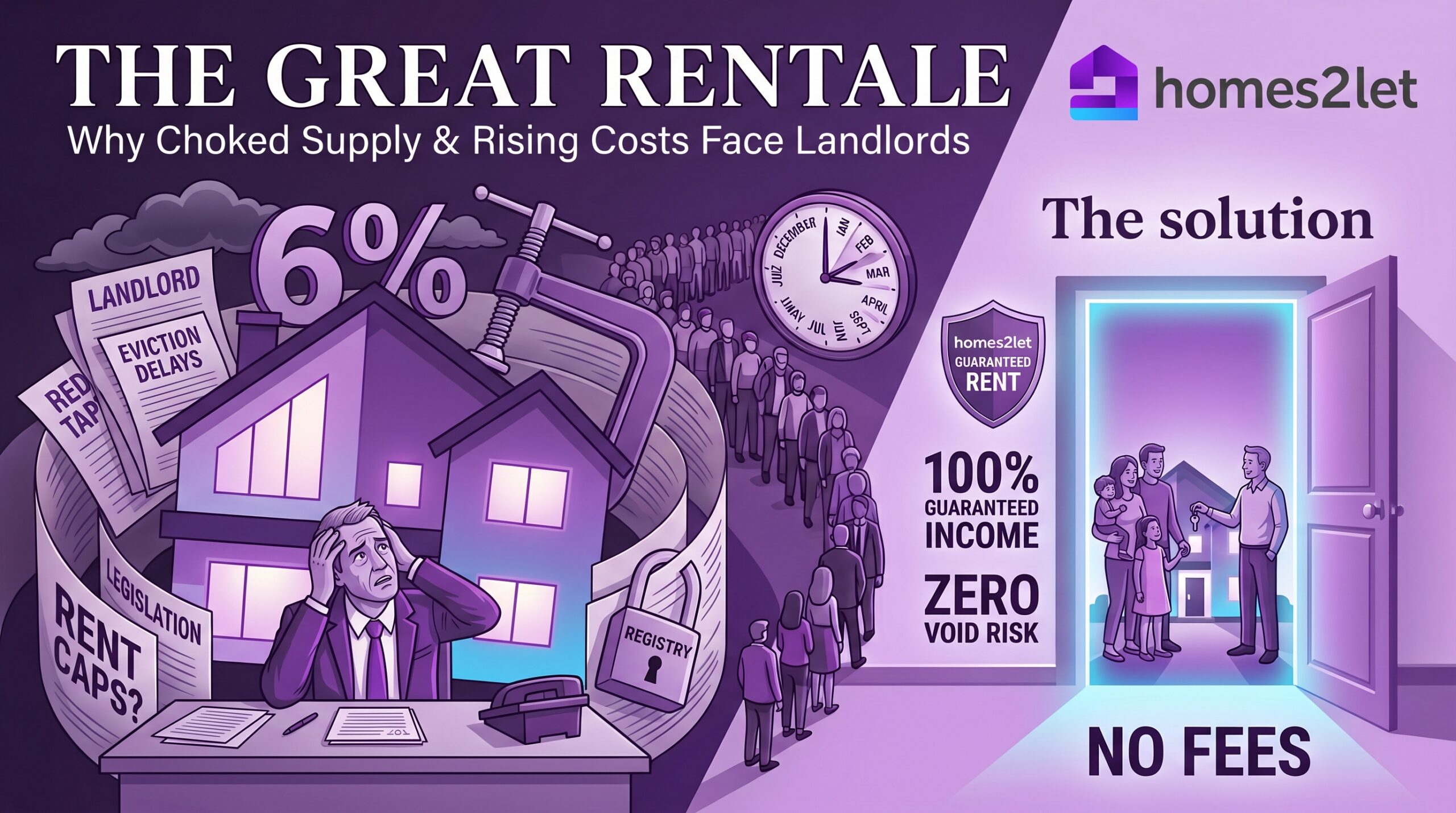
If you follow UK property headlines, you already know the private rented sector (PRS) is sending intensely conflicting signals. On the ground, tenant demand has never been higher, with queueing applicants fighting over an evaporating pool of rental listings. Yet behind the scenes, private landlords are contending with an unprecedented multi-front squeeze: borrowing costs lingering near 6%, an avalanche of statutory red tape, shifting tenancy legislation, and growing political pressure for statutory rent caps.
For the independent property owner, the core question is no longer whether people need homes. The fundamental issue is whether the traditional, do-it-yourself landlord model can survive the mounting operational, legal, and financial friction currently sweeping the UK housing landscape.
Here is an in-depth breakdown of the latest market data, the policy battles playing out in Westminster, and the strategic steps landlords must take to insulate their portfolios from volatility.
1. The Supply Collapse: Rents Climb as Available Listings Evaporate
Across every major metropolitan region in England, rental inventory has experienced a severe contraction. Rather than a routine seasonal dip, the numbers reflect a systemic withdrawal of private housing stock from the market:
- City of London: Down 42%
- Bristol: Down 36%
- Manchester: Down 20%
- The Midlands: Down 19%
This choked supply has triggered sharp upward rent trajectories. Nationally, rents have risen by an average of 5%, outpacing broader economic indicators. Regionally, the numbers are starker: across the North East, rents have surged by an eye-watering 14%, jumping from an average of £870 to £1,000 per calendar month.
On paper, record-high asking rents might appear to promise attractive headline yields. The reality for most independent landlords, however, is far less celebratory. This supply drop is largely driven by accidental and small-scale landlords exiting the market entirely. Faced with escalating statutory costs and tighter margins, many investors are selling up, leaving the remaining operators to shoulder heightened scrutiny and intense local demand.
2. The 6% Mortgage Wall Meets Flatlining Capital Values
Compounding the supply crunch is the ongoing cost of leverage. Five-year fixed buy-to-let mortgage rates have drifted back up to an average of 6%, with competitive sub-5% deals rapidly disappearing from high-street lending panels. For landlords facing imminent refinancing deadlines or holding variable-rate debt, debt servicing now consumes a massive portion of gross rental receipts.
At the same time, the historical safety net of buy-to-let investing—steady capital appreciation—has stalled. Recent figures from major lenders, including Lloyds (incorporating Halifax data), show that annual house price growth has flatlined at 0.0%, leaving the average UK home price hovering around £298,000.
With core inflation holding above zero, property values are actively declining in real terms. Landlords can no longer rely on paper capital growth to subsidise cash-flow shortfalls, unexpected maintenance bills, or extended void periods. In today’s climate, a portfolio must stand entirely on its net monthly income.
3. Policy Whiplash: Rent Caps, Conference Clashes, and Registry Levies
The operational landscape for independent landlords is shifting quickly under intensifying political debate and regulatory change.
The Spectre of Statutory Rent Caps
The debate over rent caps has returned to the fore. The Green Party is actively promoting a framework designed to limit annual rent increases to a hard maximum of 2% over a proposed three-year emergency stabilization window. Under this model, if either general inflation or wage growth drops below 2%, the permissible rent increase would drop to match that lower figure.
If rent controls gain traction in coalition discussions or local municipal policies, landlords could find their returns legally decoupled from real-world inflation, soaring repair costs, and escalating mortgage interest rates.
Legislative Division Over the Renters’ Rights Act
Housing policy remains a central battleground across party conferences. Shadow Housing Secretary Katie Lam recently argued for the repeal of the Renters’ Rights Act, asserting that the abolition of Section 21 and the shift toward rigid, evidence-heavy Section 8 claims have backfired by driving responsible landlords out and exacerbating supply shortages.
Yet for current property owners, the reality on the ground remains unchanged: county courts are severely backlogged, routine possession cases drag on for 9 to 12 months, and recovering possession of a property has become an expensive, drawn-out legal procedure.
The £65 National Landlord Database
Adding to the administrative overhead is the rollout of the national private rented sector database. Designed to catalog England’s estimated 5.1 million private rental properties, registration is projected to cost roughly £65 per property, generating approximately £325 million in state revenue.
For portfolio owners, this charge does not replace existing obligations. Instead, it layers directly on top of selective licensing schemes enforced by local town halls, where five-year council licenses routinely cost upwards of £1,000 per dwelling.
Market Stagnation and Stamp Duty
Wider transaction volumes across the property market have plummeted by 18% year-on-year. While proposals to eliminate Stamp Duty on primary residences have been floated to restart stagnant sales chains, buy-to-let investors continue to face steep stamp duty surcharges on second homes and investment properties, penalizing those seeking to expand or restructure their holdings.
Watch the Breakdown: Market Trends & What Lies Ahead
For a detailed analysis of these figures, interest rate volatility, and what upcoming policy announcements mean for property owners, watch James Nicholson’s full market briefing below:
Navigating the Modern Rental Market: DIY Management vs. Guaranteed Rent
When borrowing costs linger at 6% and regulatory oversight reaches historic highs, a single tenant dispute, compliance error, or prolonged vacancy can instantly turn a profitable property into a severe financial liability.
| Operational Risk Factor | The Traditional DIY Approach | Homes2Let Guaranteed Rent |
| Rental Voids & Turnover | You must service the mortgage and pay council tax while hunting for replacement occupants. | Zero void risk. You receive contracted rent 365 days a year, whether the home is occupied or vacant. |
| Arrears & Payment Defaults | Direct cash-flow loss the moment an occupant faces job disruption or financial hardship. | 100% Guaranteed income. Payments land in your account on the exact same date each calendar month. |
| Agency Fees & Hidden Surcharges | Management deductions of 10%–15% + VAT, combined with inventory fees, renewal charges, and maintenance markups. | 0% Commission. Keep 100% of your agreed rent with no management deductions or unexpected fees. |
| Court Backlogs & Possession | Navigating complex Section 8 rules, 9–12 month county court delays, and costly legal representation. | Complete operational shielding. We assume day-to-day tenant management, contracts, and administration. |
| Licensing & Statutory Compliance | Keeping up with gas safety renewals, EPC updates, database entries, and selective council rules. | Total property care. Our team oversees property maintenance, routine inspections, and statutory standards. |
Take the Uncertainty Out of Your Property Investment
Legislative debates will continue, national registry fees will arrive, and interest rate volatility will persist. However, navigating the modern rental landscape does not mean you have to absorb every financial shock yourself.
By partnering with Homes2Let, you eliminate default risk and bureaucratic friction while maintaining steady, contractually guaranteed returns:
- Consistent, Contractual Cash Flow: Sleep easy knowing your agreed rent will arrive every month, regardless of tenant circumstances or market fluctuations.
- Transparent Numbers: No hidden maintenance markups, no letting agency percentages, and no surprise administrative line items.
- Genuine Passive Ownership: Step away from late-night emergency maintenance calls, tenancy disputes, and court filings while keeping your asset well-managed.
The long-term fundamentals of UK property remain resilient: structural demand for good homes is secure, and rental yields remain an indispensable component of long-term wealth preservation. To make it work in today’s market, you simply need to remove uncompensated risk.
Contact Homes2Let today to learn how our Guaranteed Rent Scheme can protect your cash flow, keep your yields predictable, and bring security back to your buy-to-let portfolio.

Riz is the founder of homes2let and has been in real estate for over twenty years. He has a background in economics and is a real estate developer and buy to let investor.
You can get in touch with Riz via riz@homes-2let.com.
Related Insights

Making Tax Digital for Landlords Explained
Making Tax Digital (MTD) for landlords has been in the pipeline for a while, but soon the time will come for property investors turning over £10,000 a year or more to start reporting tax on a quarterly basis and filing online. The key date is 6 April 2023, which may sound a way off yet, but preparation is crucial. Here’s what you need to know as a landlord about Making Tax Digital so that when the time comes, you’re all set to comply with the new rules.

Budget 2021: What it Means for UK Landlords
Today’s budget was much anticipated by many, not least landlords awaiting news on the likes of stamp duty, Capital Gains Tax and financial help for tenants. Here’s the lowdown on what Rishi Sunak’s March budget means for the UK’s buy to let property investors and landlords.

Paying Tax on Rental Income: Advice for Landlords
Do I pay tax on rental income? It’s a question posed by many would-be or new landlords. It is a good question, but when it comes to taxation of rental income, there is quite a bit to understand. Let’s explore the topic in more detail as we share our experts’ knowledge on the financial side of renting property, together with their top tax tips.