
 020 8444 5555

Buy-to-Let Repossessions Up 5%: Landlord Yield Guide
Buy-to-let repossessions are up 5% as rising mortgage rates and strict RRA regulations squeeze landlord margins. Here is what the latest ONS figures mean for your portfolio—and how to protect your income.
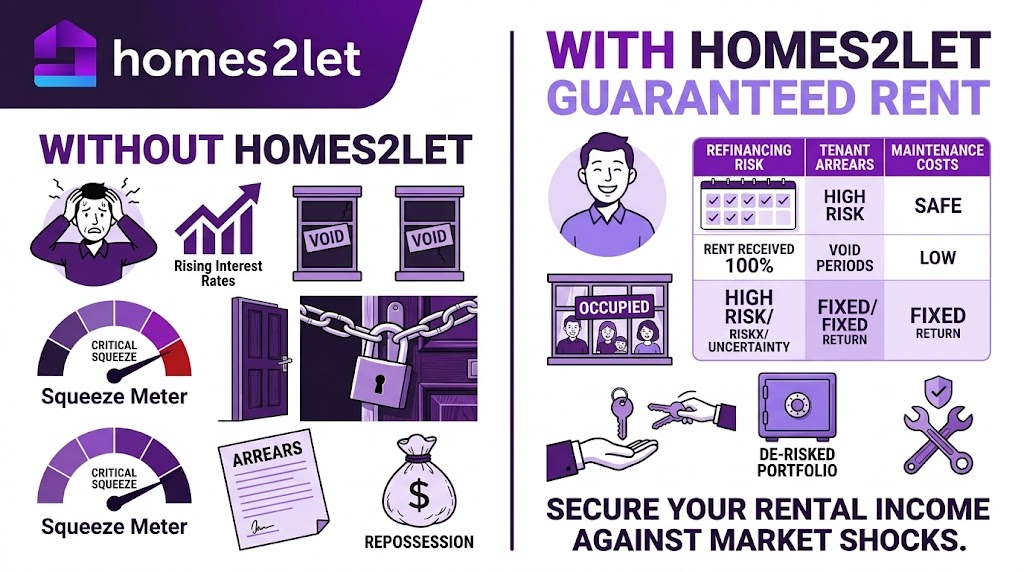
If you’ve glanced at the property news recently, you’ll have seen a headline that’s bound to raise a few eyebrows: buy-to-let (BTL) repossessions are officially on the rise again.
According to the latest figures from UK Finance and the Office for National Statistics (ONS), BTL repossessions climbed 5% year-on-year—and jumped 6% in just one quarter. Standard residential repossessions followed close behind, edging up 3%.
For anyone who’s spent the last couple of years juggling sky-high mortgage rates, soaring insurance premiums, and the regulatory gymnastics required under the Renters’ Rights Act, this feels like yet another shot across the bows.
Property expert James Nicholson recently tackled these figures over on his Property Accelerator YouTube channel, cutting through the sensationalism to look at what’s really going on behind the numbers. And more importantly: what does it mean for your portfolio?
What the Data Actually Tells Us (And Why Panic Isn’t Necessary)
“Repossessions surging” sounds grim. But before you panic-sell your entire portfolio, it pays to put the raw data under a microscope:
- BTL Repossessions: Sat at 810 properties in the latest quarter—up 5% year-on-year.
- Residential Repossessions: Hit 1,250 properties—a 3% quarterly increase.
- Serious Arrears: Surprisingly, mortgage accounts in serious arrears actually dropped by 2% quarter-on-quarter, falling to 79,160.
As James points out, while any increase in repossessions is devastating for the landlords involved, we are nowhere near the wreckage of 2008 or 2009. Back then, serious arrears spiked past a terrifying 216,000 cases.
Thanks to post-crash stress-testing and mandatory 25% equity buffers, today’s market is far more resilient. In fact, less than 0.5% of active BTL mortgages are in serious arrears right now.
Featured Analysis: Property Accelerator
Watch James Nicholson break down the ONS repossession figures, rate pressures, and why serious arrears are actually falling:
The “Mid-Market” Trap: How Squeezed Margins Catch Landlords Out
If systemic collapse isn’t on the cards, why are over 800 BTL properties being repossessed every quarter?
The answer comes down to one simple, brutal reality: shrinking operational margins.
Picture this: your fixed-rate mortgage renews, jumping from an easy 1.8% to an eye-watering 5.2%. Overnight, your monthly interest payments double. Now add an unexpected boiler replacement, a two-month void period, or a tenant who stops paying rent while you’re trapped in court backlogs. Suddenly, your steady monthly cash flow doesn’t just dip—it turns completely negative.
| Financial Risk Factor | The DIY Landlord Gamble | Homes2Let Guaranteed Rent |
|---|---|---|
| Refinancing / Rate Hikes | Unpredictable, volatile monthly cash flow | Fixed, agreed monthly payment |
| Tenant Arrears & Disputes | 100% loss of income during court delays | Rent paid on time, every single month |
| Void Months Between Occupants | 8.3% gross income loss per 4-week void | Zero void losses—paid 365 days a year |
| Agency Commissions & Fees | 10%–15% + VAT chipped off gross yield | 0% Commission & zero management fees |
Taking Repossession and Void Risks Off Your Plate
The landlords currently struggling aren’t bad investors. Most of them simply got caught in a vice: top-line rents are capped by what local wages can bear, while bottom-line costs keep climbing.
Instead of walking the financial tightrope—hoping mortgage rates drop, tenants pay on time, and nothing breaks—there’s a far safer way to protect your hard-earned capital.
By handing your property over to Homes2Let, you take financial volatility off the table entirely:
- 100% Guaranteed Monthly Income: Get paid on the exact same date every single month—regardless of whether your property is occupied or between tenants.
- No Agent Fees or Commissions: Keep 100% of your agreed rental yield without handing over 10% to 15% in letting agency management fees.
- Complete Legal & Regulatory Shielding: We handle statutory checks, tenant referencing, and ongoing compliance, shielding you from costly court disputes.
- Proactive Property Upkeep: Our dedicated maintenance team takes care of day-to-day repairs, ensuring your asset stays fully compliant with Decent Homes Standards without midnight emergency calls.
The Bottom Line
A 5% rise in repossessions is a clear warning sign: running a buy-to-let portfolio on razor-thin margins leaves zero room for error.
You can continue taking on the financial risk of rate hikes, tenant arrears, and unexpected void months—or you can lock in a guaranteed, stress-free return and let the experts handle the rest.
Ready to de-risk your rental portfolio? Get in touch with the team at Homes2Let today to find out how our Guaranteed Rent Scheme locks in total financial certainty, no matter how the market shifts.

Riz is the founder of homes2let and has been in real estate for over twenty years. He has a background in economics and is a real estate developer and buy to let investor.
You can get in touch with Riz via riz@homes-2let.com.
]
Related Insights

Government Gas Boiler Ban: How Should Landlords React?
By 2025, gas boilers and other fossil fuel powered heating and hot water systems will be replaced by renewable heating systems in all new-build homes. This is part of a government drive to achieve net-zero CO2 emissions by 2050. The ‘Future Homes Standard’ is also aimed at lowering fuel bills. But how will the move affect private landlords?

New Legislation Grants Councils Extensive Power Over Landlords
New legislation passed on December 23rd, 2024, has significantly expanded the power of councils to charge landlords and regulate the private rental sector in England and Wales. This law centers around "selective licensing," requiring landlords to obtain a license for a fee to rent out their properties. While intended to improve housing standards, concerns have been raised about its effectiveness, potential to increase rents, and the impact of abolishing Section 21. Landlords are urged to understand the new requirements and contact their local council for details.

Budget 2021: What it Means for UK Landlords
Today’s budget was much anticipated by many, not least landlords awaiting news on the likes of stamp duty, Capital Gains Tax and financial help for tenants. Here’s the lowdown on what Rishi Sunak’s March budget means for the UK’s buy to let property investors and landlords.