
 020 8444 5555

Heat Source Pump Grants Coming Soon for Landlords
As confirmed in the recent Autumn 2021 Budget, landlords have been included in the government’s heat source pump grant scheme, which will provide access to grants of £5,000 to help replace gas boilers with low-carbon air or ground source heat pumps from April 2022.
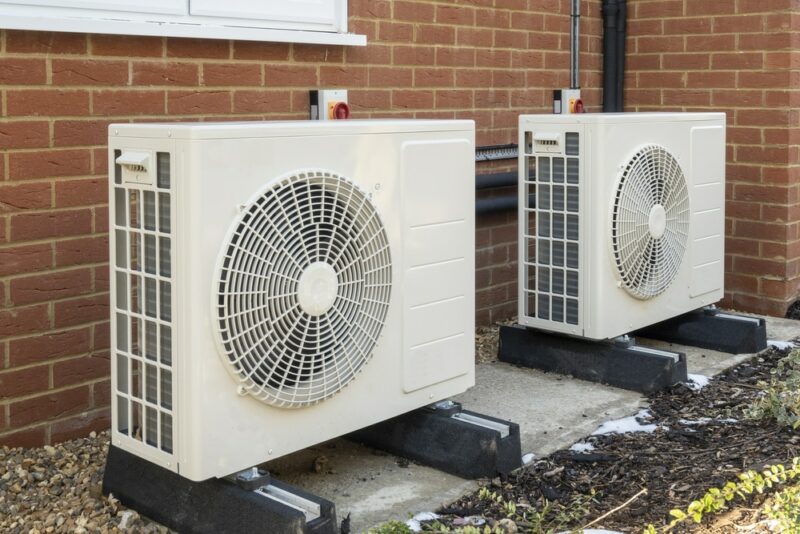
As confirmed in the recent Autumn 2021 Budget, landlords have been included in the government’s heat source pump grant scheme, which will provide access to grants of £5,000 to help replace gas boilers with low-carbon air or ground source heat pumps from April 2022.
The government’s Heat and Buildings Strategy will make it possible for landlords to access grants of £5,000 to replace gas boilers with heat pumps from April 2022.
Gas central heating systems are used in the majority of rental properties. The government has pledged to achieve net zero carbon emissions by 2050, and as part of this strategy, gas boilers will no longer be sold after 2035.
Air source and ground source heat pumps are viable alternatives, but they are considerably more expensive than a gas boiler, with an investment in the region of £6,000 to £18,000 required, depending on the size of the property that needs to be provided with heating and hot water, and the type of device chosen. So, whilst the £5,000 grant may seem generous, in actual fact, in many cases, it will only form a small proportion of the required outlay.
The Energy Saving Trust estimates that a typical air source heat pump installation will set landlords back around £6,000-£8,000, whilst ground source systems can cost between £10,000 and £18,000.
NRLA critical of the scheme
The National Residential Landlords Association (NRLA) has criticised the government’s plans, saying it has “again failed to provide the clarity needed by private landlords to plan for the future of their businesses”.
NRLA chief executive Ben Beadle said, “Eighty per cent of private rented households have gas central heating and replacing such systems will be both costly and vital to achieving net zero.
“Providing grants to assist householders and landlords to install heat pumps is a welcome step, but much more is needed to make the Government’s targets achievable.
“Once again private landlords have been left waiting for the government to publish details of the standards they will be required to comply with, the deadlines they must meet, and how such work should be funded.”
How does a ground source or air source heat pump work?
Heat pumps have been in use for several decades. They take heat from the air or the ground, and use it to heat the likes of radiators, underfloor heating, warm air convectors and hot water.
A heat pump extracts heat from the air, or the ground, in the same way that a fridge extracts heat from its interior. It can obtain this heat even when it is as cold as -15 degrees Celsius. The heat is converted into a fluid, which then passes through a compressor where its temperature is increased. The higher temperature heat then moves to the heating and hot water circuits of the property.
What are the ground and air source heat pump pros and cons?
The heat extracted using a heat pump is constantly being naturally renewed, which means that energy costs will be lower, and carbon emissions will also be reduced. However, because electricity is required to power the pumps, the system cannot be classed as carbon neutral, or completely ‘green’.
The fact remains though that with a heat pump, carbon emissions will be reduced in comparison to using a gas boiler and, whilst the unit will need an annual service, it is virtually maintenance-free.
Consideration will have to be given though to the space required for the external unit, which needs to be placed outside. Whilst air source heat pumps are smaller than ground source heat pumps, it is still necessary to find the right amount of space on an outer wall, or on the ground. This can sometimes prove challenging for properties in urban areas.
A question often asked is, are air source heat pumps noisy? The answer is that, providing the unit is installed and maintained correctly, there should be no disturbance. However, the external unit is by no means silent, so some noise should be expected.
There is also the visual aspect to consider. Ground source heat pumps are less intrusive due to the fact that most of the system is fitted underground. Air source heat pumps are mostly above the ground, however, and will therefore be on show.
Should landlords convert to ground or air source heat pumps?
Ultimately, something has to be done to reduce carbon emissions, and with gas boilers being phased out over the next few years, an alternative method of providing heat and hot water for homes has to be explored. The heat source pump grants provided by the government are a step in the right direction, but it remains to be seen whether more help will be available for landlords in improving the energy efficiency of their properties.
It is worth taking time to compare the pros and cons of the different types of heat pumps, and to take advice on the best type of heating and hot water system for your particular type and size of property.
Change is inevitable as efforts to reduce climate change ramp up. But there is one thing that will provide certainty… the homes2let guaranteed rent scheme.
The homes2let guaranteed rent scheme protects landlords against the risk of rent arrears, whilst also providing a comprehensive property management service, taking all the hassle out of the day to day running of your property.
To learn more about how our rent guarantee scheme works, please get in touch.
Related Insights

Landlords: How to Winter Proof Your Rental Property
With temperatures plummeting, so the risk to property damage increases. Winter is therefore a vital time for landlords to put measures in place to safeguard their investment. Let’s take a look at some of the most essential steps you should be taking to protect your rental property during the harshest months of the year.

Labour’s London Housing Gambit: Unpacking the Plan to Tackle the Capital’s Crisis Amidst Ambitious Targets and Contentious Reforms
In a significant policy shift, London Mayor Sadiq Khan has unveiled Labour's new and controversial strategy to tackle the city's severe housing crisis. At the heart of the "Towards a new London Plan" initiative is a radical proposal: to explore building homes on carefully selected parts of London’s Green Belt for the first time. Citing the urgent need for affordable housing and arguing that much of the Green Belt is inaccessible "grey belt" land, the plan aims to meet a new target of 88,000 homes per year. The move has ignited fierce debate, drawing criticism from environmental groups and political opponents who question its effectiveness and timing, setting the stage for a defining battle over the future of London's landscape.

Converting a Residential Mortgage to Buy-to-Let: What You Need to Know
If you currently have a regular residential mortgage on your home, are moving out and want to let the existing one out, then you may be wondering if changing to a buy to let mortgage is possible. The answer is there are two main options. One is to obtain consent from your current lender to let your property out, or re-mortgage to a buy-to-let loan.