
 020 8444 5555

How Often Should a Landlord Decorate a Rental Property?
Whilst there are no regulations covering how often a rental property should be redecorated, there are some unwritten rules in the world of lettings that provide guidelines for landlords as to repainting, replacing a kitchen and changing carpets. If you are looking for advice on how often you should be updating your buy to let property, read on.
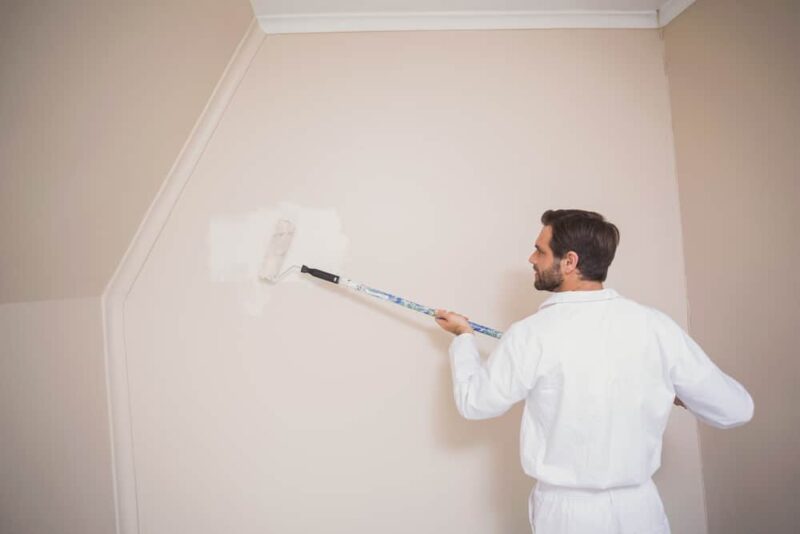
Whilst there are no regulations covering how often a rental property should be redecorated, there are some unwritten rules in the world of lettings that provide guidelines for landlords as to repainting, replacing a kitchen and changing carpets. If you are looking for advice on how often should a landlord decorate, read on.
Who is responsible for decorating a rental property?
Generally, decoration responsibilities lie with the landlord. Tenants will rarely be asked to redecorate a rental property, even if they have been renting long term. However, some may make a request to decorate to their taste, although landlords should approach such requests with caution.
Whilst it may seem a reasonable request, and may be considered a saved job for the landlord, it could turn out that the tenants’ taste in décor does not quite match your own, and may cause issues in the long run when the property finally needs to be reverted to neutral tones for the next tenant.
It is worth discussing any redecoration requests with tenants however, in the name of maintaining good relations. A compromise may be achieved which keeps both parties happy.
Whatever happens, unless the tenancy agreement allows, tenants should not redecorate without permission. Keeping a clear record of the condition of the property at the start of the tenancy courtesy of an inventory and check-in report will provide you with evidence should you need to make a claim against the tenant’s deposit for unauthorised redecoration.
How often should landlords paint their properties?
There is no official rule as to how often landlords should repaint their properties, however the general guideline is every five to six years. However, if you are renting to families with children or tenants with pets, you may need to increase the regularity.
Painting in neutral colours will make it easier to touch up in between major repaints. Avoid using custom mixed colours that will be tricky to match, and stick to a single colour throughout, so that any leftover paint never goes to waste.
You may wish to choose paints that are washable and mould resistant. Whilst these tend to cost more than regular paints, they do provide an easier ride where maintenance is concerned and will usually prove a wise investment for the long term. Mould resistant paint for kitchens and bathrooms is a good idea, as these areas are more prone to moisture.
If you have tenants in place long term and it’s time to redecorate, be sure to involve them in the process.
How often should landlords replace carpets?
A fair quality carpet that is professionally cleaned between tenancies should last around ten years.
Once your property is occupied, the tenants are responsible for taking care of the carpets. You can reasonably expect them to vacuum at least once a week, or more often for high traffic areas.
A deep clean at the end of a tenancy is a good idea, but for longer term tenancies, it is advisable to organise a professional clean once a year. This will promote good hygiene and tenant relations, and will also help prolong the life of the carpet.
Whilst you can expect a degree of wear and tear during the course of the tenancy, any damage, such as stains or burns, will be down to the tenant to cover the cost. Providing you can prove the damage was down to the tenant, you should be able to make deductions from their deposit to replace the floor covering.
Carpets in some areas may need replacing more often than others. For example, hallway and living room carpets will probably need to be renewed on a more regular basis than those in bedrooms.
Our guide to choosing the best floor covering for rental property should prove useful if you are not sure which is right for your buy to let.
How often should a landlord replace a kitchen?
A good quality kitchen should last at least 15 years, providing it receives proper care. There is no need to go all-out with a handmade, bespoke kitchen for rental properties. Installations from high street DIY chains are perfectly acceptable and robust.
If you are going to invest in anything, make it the countertop, as this is the part that experiences the most damage. Tenants may not always use heat protectors or chopping boards, which can lead to the countertops being marked.
This is precisely why it is good practice to choose this element of the kitchen wisely. Don’t over-invest in something that will be difficult to replace or expensive to repair, such as granite or solid wood. Instead, opt for something durable that doesn’t show marks, and that can be easily replaced.
Homes2let offers a property management service that reduces the landlord burden, with an added benefit…
As a landlord, you have enough to deal with without having deal with deposit claims. So why not hand over to a property management service, but one with a clear added benefit?
The homes2let guaranteed rent scheme guarantees rental payments, even when the property is untenanted, as well as taking all the hassle of property management off your shoulders too.
Interested to discover more? You are welcome to get in touch with our expert team to discover how we can make your life as a landlord more of a breeze.

Riz is the founder of homes2let and has been in real estate for over twenty years. He has a background in economics and is a real estate developer and buy to let investor.
You can get in touch with Riz via riz@homes-2let.com.
Related Insights
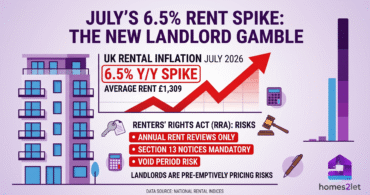
July’s 6.5% Rent Spike: The New Landlord Gamble
Under the new RRA framework, traditional rent review clauses are history. Landlords are now legally restricted to just one review a year, meaning they only get one shot every 52 weeks to adjust for inflation and rising costs. The result? Landlords are aggressively "front-loading" their asking rents right at the start of new tenancies. But in a cooling economy, asking tenants to swallow a 6.5% premium is a huge roll of the dice. Do it wrong, and a single vacant month will instantly wipe out your profits.

How Buy-to-Let will be Impacted by a Shrinking Economy
Landlord, letting agent or estate agency, the COVID-19 crisis will have affected you in some way. For some, the effects will have been considerable, with the financial fallout of the pandemic at the heart of the problem. But does it have to be a problem? To what extent will buy to let actually be impacted by a shrinking economy?

Survey Reveals the Current Mood of the Private Rented Sector
A recent survey of over 14,000 landlords, tenants and letting agents, conducted by deposit protection service mydeposits and deposit replacement membership Ome, has revealed some interesting insights into the current mood of the private rented sector.