
 020 8444 5555

Energy Efficiency Regulations: Changes on the Horizon
Since 1 April 2020, it has been law for landlords to ensure all their privately rented properties reach a minimum E-rating for energy performance. This includes all new and existing tenancies. Measures are now being put in place to enforce compliance, and plans are afoot to increase the rating requirement from ‘E’ to ‘C’ for all new tenancies from 2025 and all existing tenancies from 2028.
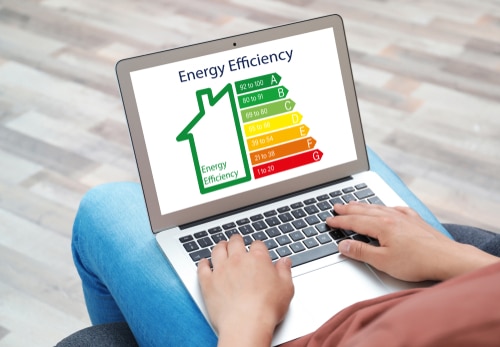
Since 1 April 2020, it has been law for landlords to ensure all their privately rented properties reach a minimum E-rating for energy performance. This includes all new and existing tenancies. Measures are now being put in place to enforce compliance, and plans are afoot to increase the rating requirement from ‘E’ to ‘C’ for all new tenancies from 2025 and all existing tenancies from 2028.
Until recently, the Energy Efficiency (Private Rented Property) (England and Wales) Regulations 2015 haven’t been widely enforced. However, housing minister Christopher Pincher has now revealed plans to clamp down on landlords and letting agents who fail to produce the minimum required EPC when renting property.
EPC enforcement strategies in the pipeline
According to Pincher, the housing ministry team will be working on strategies to enforce EPC compliance whilst building on enforcement pilots that are already in progress with local authorities. Meanwhile, over at the Department for Business, Energy and Industrial Strategy (BEIS), processes are being tested in conjunction with a number of councils with a view to monitoring and enforcement of EPC regulations.
Government consultation on revised EPC ‘C’ rating
Plans to change the minimum EPC rating of privately rented homes in England and Wales from band E to band C, also from the BEIS, would see all new tenancies having to comply by 2025, and all existing tenancies needing to meet the revised requirement from 2028.
Industry spokespeople have expressed concerns about the proposed measures, especially given the considerable number of properties involved, the fact that many properties in the private rented sector are of older type construction and therefore challenging and costly to bring up to a higher band rating, and of course the impact of the Covid-19 pandemic.
As a landlord or letting agent, you are invited to have your say on the changes, and can do so via this link:
Open consultation: Improving the energy performance of privately rented homes
The consultation closes at 11.45pm on 8th January 2021.
Energy Performance Certificates (EPCs) were introduced in 2007 as part of the now obsolete Home Information Pack. The certificate is designed to let potential tenants and property buyers know about the energy efficiency level of a home which will help them be more informed about the likely energy costs, as well as the areas of the property that are in need of attention from an energy efficiency point of view.
Landlords and property sellers are required by law to provide an Energy Performance Certificate. Once obtained, they need to be renewed every ten years.
From 1 April 2018, landlords have not been permitted to let a residential property with an EPC rating below E on a new tenancy. From 1 April 2020, the rule applied to all existing tenancies.
EPCs are based on a property survey carried out by a registered Domestic Energy Assessor and are subject to a fee.
Remove the burden of legal compliance courtesy of the homes2let guaranteed rent scheme
Legal compliance is one of the greatest burdens of being a landlord, along with ensuring your rent is paid on time every month.
If you’d like to hand both of these worries over, along with all the day to day maintenance concerns and everything else that takes up your valuable time, why not consider the homes2let guaranteed rent scheme?
Our rent guarantee is provided courtesy of secure local authority tenancies which ensure your rent is paid in full by standing order every month, even during void periods.
To learn more about how our award winning team can make a difference to your day to day responsibilities and secure your monthly rental payments, you are welcome to get in touch.
Related Insights

How Buy-to-Let will be Impacted by a Shrinking Economy
Landlord, letting agent or estate agency, the COVID-19 crisis will have affected you in some way. For some, the effects will have been considerable, with the financial fallout of the pandemic at the heart of the problem. But does it have to be a problem? To what extent will buy to let actually be impacted by a shrinking economy?

A Comprehensive Guide to Buying a House to Let
Buying a house to rent out can be a profitable investment with a strategic plan. This guide covers essential steps: planning your strategy, marketing, property management, and legal compliance. Learn to identify target tenants, choose the right location, and maximise rental income while minimising risks.

Are Rent Guarantee Schemes Worth it?
With so much pressure on landlords in the wake of the COVID-19 pandemic, not least the evictions ban and, more recently, the breathing space rule, it is no wonder so many buy-to-let investors are starting to look into the benefits of guaranteed rent schemes. Here we explore the reasons for the mounting interest and ask, are rent guarantee schemes worth it?